
Organizations generate massive amounts of information through customer interactions, financial transactions, cloud applications, enterprise software, IoT devices, and business operations.
However, simply collecting data is not enough. Without proper governance, businesses often face data quality issues, compliance violations, security risks, duplicate records, poor decision-making, and increased operational costs.
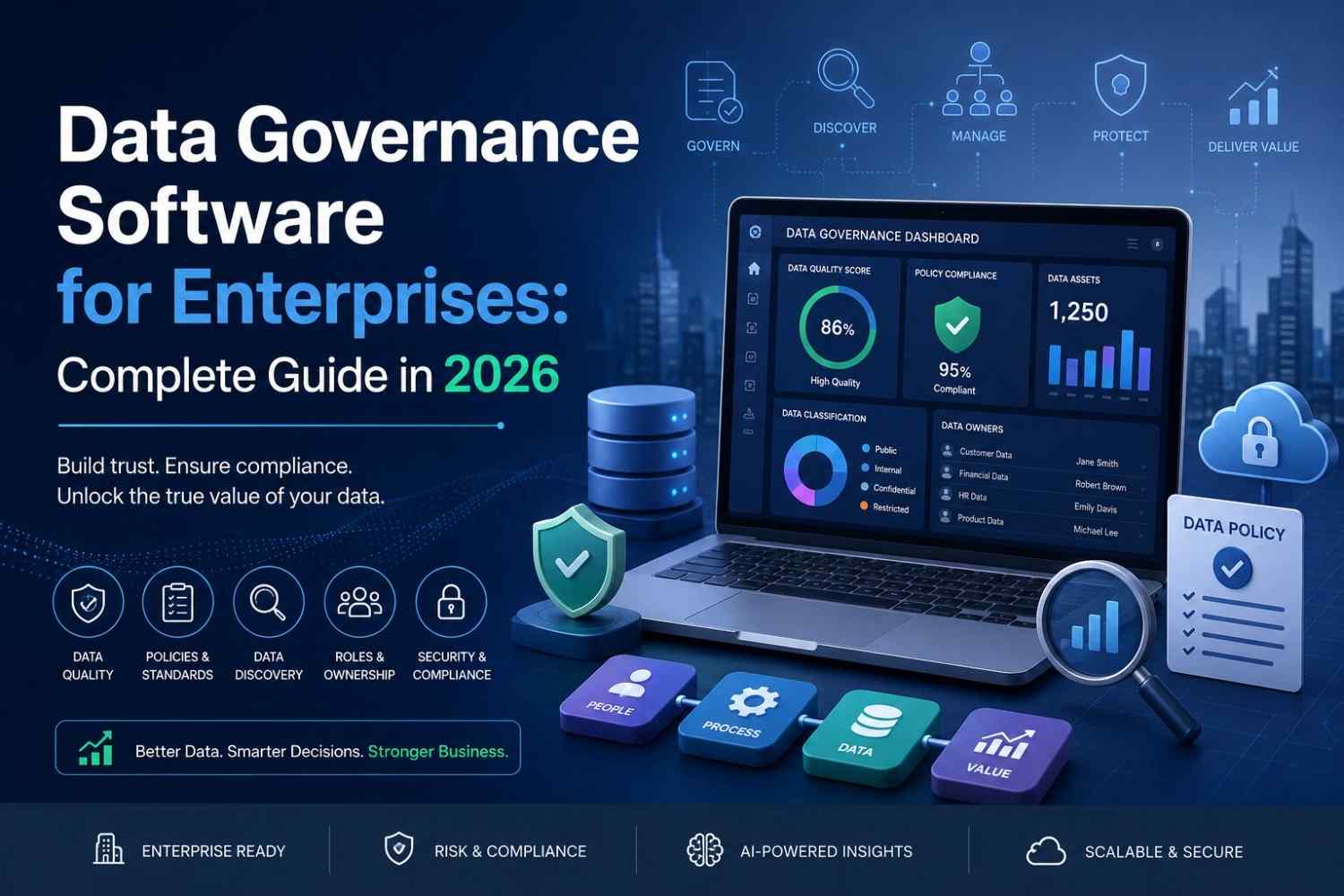
This is where Data Governance Software becomes essential. Modern enterprises use it to establish policies, improve data quality, ensure compliance, protect sensitive information, and maximize the value of business data.
What Is Data Governance Software?
Data Governance Software is a technology platform designed to help organizations manage, secure, classify, monitor, and govern enterprise data.
The software creates a structured framework that ensures data remains accurate, consistent, secure, compliant, and accessible. It helps control data throughout its entire lifecycle — from creation and storage to usage, retention, and deletion.
Why Data Governance Matters
Most enterprises manage data across multiple systems such as CRM Software, ERP Platforms, Financial Systems, Cloud Applications, HR Software, and Business Intelligence Platforms. Without governance, data often becomes fragmented, leading to data silos, compliance risks, security threats, and poor data quality.
Key Benefits of Data Governance Software
1. Improved Data Quality
Helps remove duplicates, standardize records, validate information, and improve consistency for better reporting and operational efficiency.
2. Stronger Compliance Management
Supports compliance with GDPR, CCPA, financial regulations, and industry standards through automated monitoring and reporting.
3. Enhanced Data Security
Protects sensitive data with role-based access controls, encryption, activity monitoring, and security policies.
4. Better Business Intelligence
Provides reliable data for Business Intelligence Software, enabling accurate reports, performance analysis, and strategic decision-making.
Core Components of Data Governance Software
Data Catalog Management
Provides a centralized inventory of data assets for better discovery, classification, and visibility.
Data Quality Management
Maintains accuracy, completeness, consistency, and reliability through automated controls.
Master Data Management (MDM)
Creates a single source of truth for customer, product, vendor, and financial data.
Data Security and Access Controls
Includes encryption, role-based permissions, and activity monitoring.
AI and Data Governance
AI-powered governance helps detect anomalies, improve data quality, and support machine learning initiatives by ensuring reliable datasets.
Data Governance and Regulatory Compliance
Helps organizations manage data privacy, financial reporting, industry regulations, and cybersecurity standards through automation and audit readiness.
How to Choose the Right Data Governance Software
Organizations should evaluate compliance features, security capabilities, data quality tools, integration support, and scalability before selecting a platform.
Data Governance Trends for 2026
- AI-Powered Data Governance
- Automated Compliance Monitoring
- Cloud-Native Governance Platforms
- Data Privacy Expansion
- Enterprise Data Intelligence
Frequently Asked Questions
What is Data Governance Software?
Data Governance Software helps organizations manage, secure, monitor, and control enterprise data.
Why is data governance important?
It improves data quality, enhances security, supports compliance, and enables better business decisions.
How does Data Governance Software support compliance?
The software automates monitoring, reporting, policy enforcement, and audit preparation.
Conclusion
Data Governance Software has become one of the most important enterprise technology investments for organizations seeking greater compliance, stronger security, improved data quality, and better business intelligence.
By combining Enterprise Data Management, Data Compliance Software, Data Security Platforms, Governance Risk and Compliance capabilities, and cloud-based scalability, modern governance solutions help organizations maximize the value of their data while reducing operational and regulatory risks.
As AI, analytics, cloud computing, and cybersecurity continue evolving, Data Governance Software will remain a critical component of enterprise digital transformation strategies throughout 2026 and beyond.