
Cybersecurity has become one of the most critical priorities for modern enterprises. As organizations increasingly adopt cloud computing, remote work environments, SaaS platforms, and digital transformation initiatives, the traditional security perimeter has effectively disappeared.
Modern businesses face constant threats from ransomware attacks, data breaches, insider threats, credential theft, phishing attacks, advanced persistent threats (APT), and cloud security vulnerabilities.
To address these challenges, organizations are rapidly adopting Zero Trust Security Software.
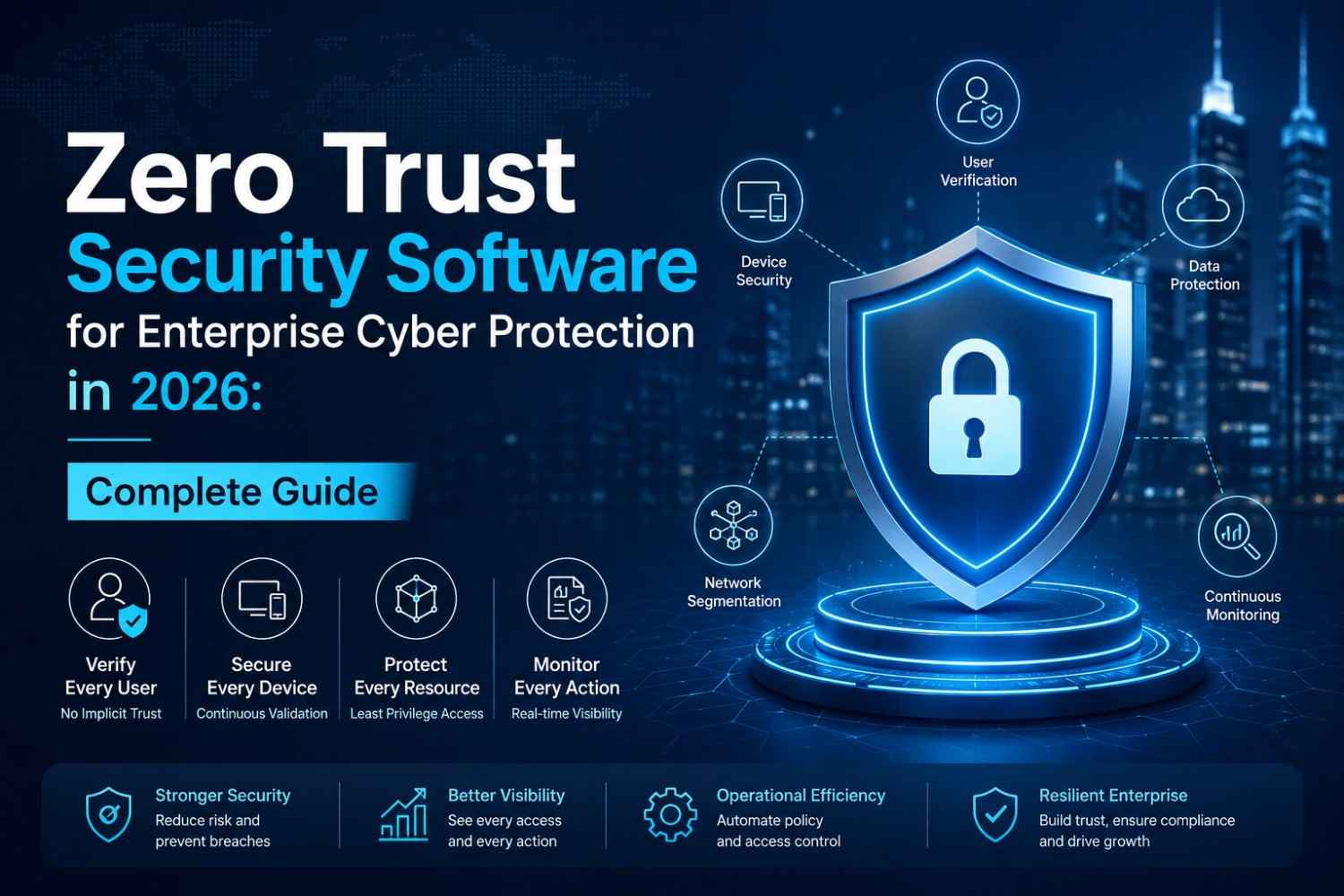
Unlike traditional security models that assume users inside the network can be trusted, Zero Trust follows a simple principle: Never Trust, Always Verify. Every user, device, application, and connection must be continuously authenticated and authorized before access is granted.
What Is Zero Trust Security Software?
Zero Trust Security Software is an enterprise cybersecurity platform designed to verify every access request regardless of whether the user is inside or outside the corporate network.
The software continuously evaluates user identity, device security status, application access permissions, behavioral patterns, risk levels, and network activity. Access is granted only after verification requirements are satisfied.
Why Traditional Security Models Are Failing
Traditional network security was designed around the concept of a trusted internal network. This model creates several risks including lateral movement by attackers, insider threats, and challenges with cloud adoption and remote work. Zero Trust Security Software addresses these challenges by implementing continuous verification.
Key Benefits of Zero Trust Security Software
1. Enhanced Cybersecurity Protection
Helps prevent unauthorized access, reduce attack surfaces, limit lateral movement, and detect suspicious behavior.
2. Improved Identity Security
Identity and Access Management (IAM) Software enables strong authentication, access control, and identity governance.
3. Reduced Business Risk
Helps mitigate financial losses, regulatory penalties, operational disruptions, and reputational damage through proactive risk management.
4. Better Regulatory Compliance
Supports compliance with GDPR, ISO 27001, SOC 2, HIPAA, PCI DSS, and other standards through audit trails and monitoring.
Core Components of Zero Trust Architecture
Identity and Access Management (IAM)
Provides user authentication, access control, role-based permissions, and identity governance.
Multi-Factor Authentication (MFA)
Requires users to verify identity through multiple methods to dramatically reduce credential-related attacks.
Zero Trust Network Access (ZTNA)
Replaces traditional VPNs with granular access controls and application-level security.
AI-Powered Cybersecurity
AI-powered security platforms can detect anomalies, identify threats, analyze user behavior, automate incident response, and predict cyber risks.
Cloud Security and Zero Trust
Zero Trust is particularly effective for securing SaaS applications, public cloud platforms, hybrid environments, and multi-cloud architectures.
Zero Trust Security Trends for 2026
- AI-Driven Security Operations
- Identity-Centric Security
- Security Automation
- Cloud-Native Security Platforms
- Integrated Risk Management
Frequently Asked Questions
What is Zero Trust Security Software?
Zero Trust Security Software continuously verifies every user, device, and access request before granting permissions.
Why is Zero Trust important?
It reduces cybersecurity risks by eliminating implicit trust within enterprise networks.
What is IAM Software?
Identity and Access Management Software controls authentication, authorization, and user permissions.
Conclusion
Zero Trust Security Software has become one of the most important enterprise cybersecurity investments for organizations seeking stronger protection against modern cyber threats.
By combining Identity and Access Management, Cyber Risk Management, Security Analytics, Cloud Security, Compliance Management, and AI-powered threat detection, Zero Trust creates a comprehensive security framework capable of protecting today's distributed enterprise environments.
As cybersecurity threats continue evolving, Zero Trust Security Software will remain a cornerstone of enterprise cyber protection strategies throughout 2026 and beyond.